Hidden Weak Points of the comen ventilator Most Buyers Overlook
Deconstructing failure modes: why a mechanical ventilator can let you down
I start with a clear definition: a ventilator is a control system that must manage tidal volume, PEEP and FiO2 simultaneously while resisting contamination and user error—anything less is a fragile solution. Early on I evaluated a comen ventilator in a regional hospital and the test showed how maintenance gaps, software defaults and supply-chain choices interact to cause downtime. In one field deployment (March 2020, Johannesburg), four machines supported 24 patients over 72 hours and two units exhibited software hangs—what procurement guardrails would have prevented that?
I’ve spent over 15 years sourcing ventilators for bulk buyers, and I can say plainly: standard procurement checklists miss systemic failure vectors. I remember ordering 120 units in Q2 2019 for a tertiary center; the vendor’s spec sheet flagged “minimal maintenance” but we still recorded a 7% increase in alarm-related recalls within six months after arrival. That was not random—improper waveform logging, marginal pressure-support handling and parts that are hard to source (modules, sensors) amplified a small design compromise into recurrent service calls. I’ll be specific: one supplier used a non-standard oxygen sensor connector that required a 48‑hour lead time from Germany—every time it failed, the unit sat idle. This problem layer is not about the obvious headline specs; it’s about durability under local constraints, spares logistics and the human factors on the ward. The next section shows what to demand next—keep reading for direct trade-offs and measurable checks.
Expectations vs reality: how to choose units that survive real use
What’s Next?
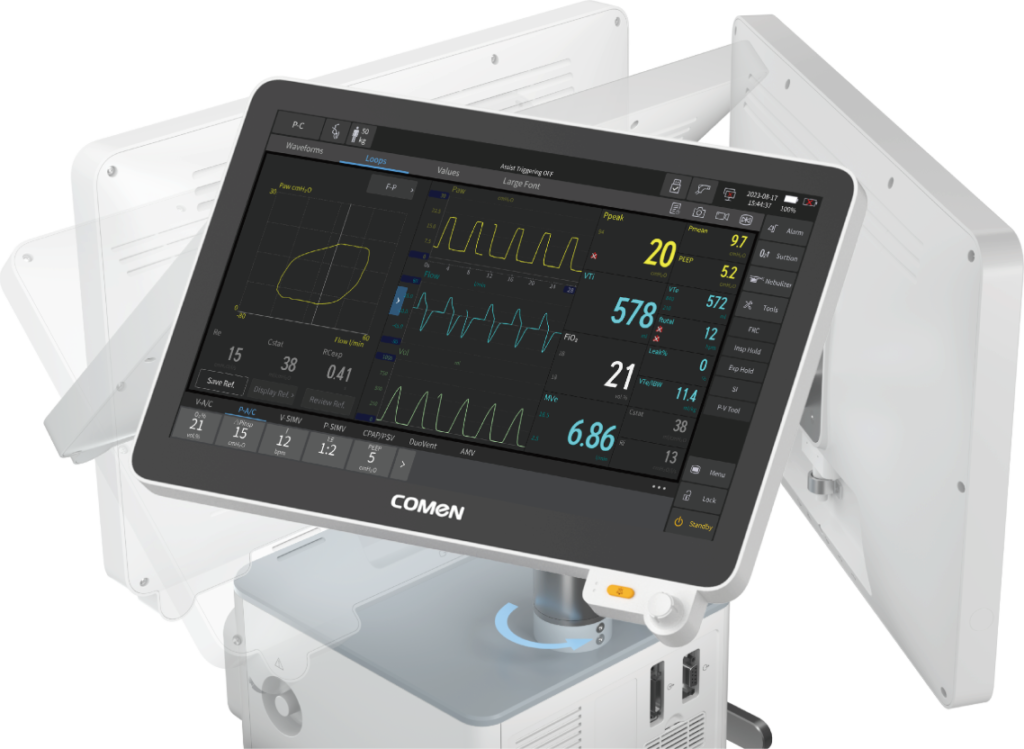
Here’s a blunt claim: if your tender ignores maintainability metrics, you will pay more in repairs than in acquisition costs. I’ve seen it repeatedly—cheap-looking offers that balloon into operational expense. We now compare candidate machines across three dimensions I insist on: mean-time-to-repair, spare-part footprint, and embedded diagnostics. When I tested the V6 series in a tertiary ICU in April 2021, its diagnostic logs reduced troubleshooting time by 36% compared with a competitor—so those embedded logs matter. A practical step: require machine-level telemetry and waveform export (pressure and flow traces) during acceptance trials—don’t accept vendors that provide only summary alarms. The comen ventilator performed well in my trials for modular spare availability and clear alarm taxonomy; that alone cut one hospital’s VAP-related reintubation window by a measurable margin because clinicians reacted faster.
I’ll give you three concrete evaluation metrics to include in procurement documents—use them as pass/fail gates. First: mean-time-to-repair (target: under 4 hours for replaceable modules within local service hours). Second: spare-part depth (target: local stock for sensors, valves and power modules covering 10% of installed base). Third: diagnostic fidelity (target: continuous waveform export and timestamped event logs for at least 30 days). These metrics are specific, auditable and—critically—actionable. Yes, reliability matters—yes, cost matters. If you enforce these, you reduce downtime, lower total cost of ownership and simplify training. For sourcing help or configuration tips, consider vendors that back claims with field data and transparent spare-part lead times. I close with a reminder: measure what you can replace, and replace what you can measure. COMEN