From Factory to Market: What Importers Should Know About Sriracha Sauce Production
The international hot sauce market is shaped by changing food habits, regional flavor preferences, and the growing popularity of Asian-inspired cuisine. Sriracha, in particular, has moved beyond its traditional culinary associations and found applications in restaurant menus, packaged foods, and home cooking. Its commercial potential depends on more than pepper intensity; ingredient consistency, processing technology, packaging suitability, and export readiness all influence its market performance.
Businesses evaluating a sriracha sauce exporter need to understand how these elements connect throughout the manufacturing and distribution process. JOLION Foods is among the manufacturers serving international food markets with chilli sauce production and OEM/ODM services.

Understanding the Ingredients Behind Sriracha Sauce
The flavor profile of chilli sauce begins with the selection and preparation of peppers. Fresh chilli contains natural pigments, aromatic compounds, and capsaicinoids that contribute to color, fragrance, and pungency. Differences in pepper varieties and maturity can produce noticeable variations in the final formulation. Manufacturers must consider these characteristics when establishing ingredient specifications, particularly when products are intended for repeated commercial production.
Fermentation and marination are two processing approaches that can influence flavor development. Depending on the formulation, controlled fermentation may introduce additional acidity and aromatic complexity through microbial activity. Marination, meanwhile, allows seasoning ingredients to interact with the chilli over a defined period. Temperature, salt concentration, processing duration, and raw material condition all affect the resulting flavor. Careful process monitoring helps manufacturers maintain the intended sensory characteristics between batches.
The balance between heat, sweetness, acidity, and saltiness also determines how a sauce performs in different recipes. Excessive pungency may overpower delicate ingredients, while insufficient acidity can make the overall flavor seem heavy. Product developers frequently use sensory panels to assess these characteristics alongside viscosity, color, and aroma. Testing with representative foods provides more useful feedback than tasting the sauce independently.
Processing Technology and Consistency in Commercial Production
Industrial sauce manufacturing involves several stages that require coordination. Raw chilli preparation, ingredient blending, thermal processing, filling, sealing, and labeling each contribute to the final product. Variations in particle size or mixing conditions can affect texture, while inconsistent heating may influence color and flavor. Production specifications help operators maintain repeatable conditions throughout these operations.
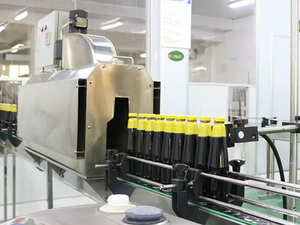
Equipment configuration plays a significant role in manufacturing efficiency. Mixing tanks support ingredient distribution, while filling machines regulate the quantity transferred into individual containers. Thermal processing equipment can be used according to the product’s formulation and food safety requirements. Automated systems reduce certain manual variations, although routine equipment maintenance, calibration, and production supervision remain necessary.
JOLION Foods operates a manufacturing facility covering 20,000 square meters, with six automated production lines and an annual production capacity of 15,000 tons. Its chilli sauce manufacturing range includes chilli sauce, chilli oil, sweet chilli sauce, and sriracha chilli sauce. The factory also lists a dedicated monthly production capacity of 500 tons for sriracha. Its manufacturing equipment includes fermentation tanks, stewing equipment, automatic filling machinery, and packaging systems.
Food Safety, Packaging, and International Compliance
Food safety management begins before ingredients enter the production facility. Suppliers should provide relevant raw material information, while manufacturers need procedures covering ingredient inspection, storage conditions, equipment sanitation, and production hygiene. Batch identification is another important element because it allows products to be traced through manufacturing and distribution records if a quality concern arises.
Thermal processing and acidity management require particular attention in sauce production. The appropriate treatment depends on the recipe, packaging format, and intended storage conditions. Acidity measurements, microbiological testing, and shelf-life studies can help determine whether a formulation is suitable for its intended distribution environment. Manufacturers should establish processing parameters through product-specific validation rather than applying identical conditions to every sauce.
Packaging influences both product protection and retail presentation. Bottles, caps, seals, and labeling materials need to be compatible with the sauce formulation and transportation conditions. Leakage during shipping can damage surrounding cartons, while inadequate labeling may create difficulties during customs inspections or retail distribution. Importers should review ingredient declarations, allergen information, nutritional labeling, and local language requirements before approving the final packaging design.
Export Planning and Private Label Development
International distribution requires coordination between production schedules, shipping arrangements, and destination-market regulations. Importers need to account for manufacturing time, freight transit, customs clearance, and warehouse receiving procedures when planning product launches. Seasonal demand can make these calculations particularly important, since delays may affect promotional campaigns and retailer replenishment.
Private-label development introduces additional decisions involving branding, packaging dimensions, product specifications, and target consumer groups. A distributor serving restaurant chains may prioritize bulk packaging and consistent flavor performance, whereas supermarket retailers may focus more heavily on individual serving formats and shelf presentation. Clear specifications reduce misunderstandings during sampling, quotation, and production approval.
The supplier evaluation process should also cover communication and order management. JOLION Foods outlines a cooperation process that includes inquiry, product specification confirmation, quotation, negotiation, payment, label confirmation, production, and delivery follow-up. Its website also states that free samples and OEM/ODM services are available. This gives prospective buyers a framework for understanding the stages involved in developing an export order.
Conclusion
Sriracha sauce manufacturing combines ingredient science, processing control, packaging decisions, and international trade coordination. Each stage influences how the finished product performs after leaving the factory, making technical evaluation just as important as commercial negotiation. Businesses searching for a sriracha sauce exporter can benefit from examining production capacity, quality documentation, customization arrangements, and experience with international distribution.
With its dedicated sriracha production capacity and broader seasoning manufacturing facilities, JOLION Foods offers relevant options for importers exploring chilli sauce sourcing and private-label development. A clear understanding of product requirements and destination-market expectations provides a stronger foundation for long-term cooperation.